The most famous buildings of Buenos Aires : the Kavanagh.

Corina Kavanagh is not from those who joke. It is the end of the Twenties: since several generations already, her family opposes the Anchorena's one.The origin of this hate : common stray desire upon the same building lands, the same houses or the same apartments in the district of Retiro. Immensely rich, involved in a frantic race the only objective of which is the acquisition of the maximum of land goods, each of the two families wants to leave the largest print. One and the other are not on speaking except by lawyers. Then when one of the Kavanagh girls has the bad taste to become infatuated with one of its kids, the Anchorena family can only be opposed to this unthinkable union.Beside herself with rage in front of this affront, Corina decides to have a monumental building built in front of the Anchorena's house to deprive them of the sight of the Church of Blessed Sacrament they had build with aim of leaving their bones there. It will be necessary for them to bypass the obstacle or to pass by the appropriate named passage “Corina Kavanagh” to devote themselves to their pious activities.

Edificio Kavanagh : designed by the architects, Sanchez, Lagos and De La Torre, built in 14 month, it was inaugurated on January 15, 1936. Higher skyscraper of South America (120m-30 stages), its style art deco brought to it the Price of Honor of American Institute of Architects . Adress : Florida 1065.

River Plate, the other “temple” of Argentinian football.

Sunday October 8, took place in the "estadio monumental", the “Superclásico” won by the club “River Plate”, 3 to 1 (*), at the expense of its lifelong rival, the club of “Boca Juniors”.
Once again, as at the time of World cup, the whole city had stopped, families quarreled, lifelong friends insulted the one who did not carry the same shirt : blue and yellow for “Boca”, white and red for “River”. Impassioned comments of the sports correspondents went from TV set to TV set, preventing the indifferent one or the ignoramus, to benefit from the silence which prevails traditionally at the end of the Sunday evening, in “the city which never sleeps”.
Four times, a dull clamour come off all the “barrios”at the same time, succeeding the hysterical and without end “goaaaaalll” from the voice in the cathode ray tube. Only the few spite swearwords from the losers clan answered to it.
The “cancha” of “River” was inaugurated on May 25, 1938. Conceived to receive 70000 people, it could accept some 135000 the day of the finale of the World cup, in 1978, between the Argentinian national selection and Holland. The Atlético Club de River Plate resides in it. It was founded in 1901 and has a trophy list (**) which can make many European clubs envious. .

(*) 2 of the River's goals were marked by the 18 years old Franco-argentinian Gonzalo Higuaín.
(**) The Argentina and the world most titled club is however that of “Boca Juniors”.

The small “ criollo”, companion of the gaucho.

When in 1537, Mendoza had to put to sea failing in his attempt to found, if not a stable and durable colony, at least a city, he did not suspect, that resigning 47 small Andalusian horses to their fate, they could survive in these unknown lands.
They did better than that: they adapted perfectly to their new environment, evolved towards a complete race, even if natural crossings gave rise to more than three hundred different coat of which, chestnut, bay, or piebald.
Not exceeding one meter 50 withers, endowed with a full breast piece, a round croup and particularly muscular back legs, they became, at the natural crossbreedings mercy, the ideal companions of the Indians and the “gauchos” which named them “Criollos” since the beginning of the XVIIIth century. Nimble and sharp, they allowed to the first to drive lightning raids (malones) on the colonists lands, to the seconds to escape the police force after having achieved unspecified larceny or “crime of honor " (*) .
Their so characteristic short gallop (that Englishes call “canter”) and who gives them this swaying pace, has always however more been used for hard and healthy labours of the fields. They are also nowadays used for the polo and are often the agriculture exhibition stars(Sociedad Rural) which takes place every year in the Palermo district in Buenos Aires.

(*) episode of the first part of “Martin Fierro” by Jose Hernandez.

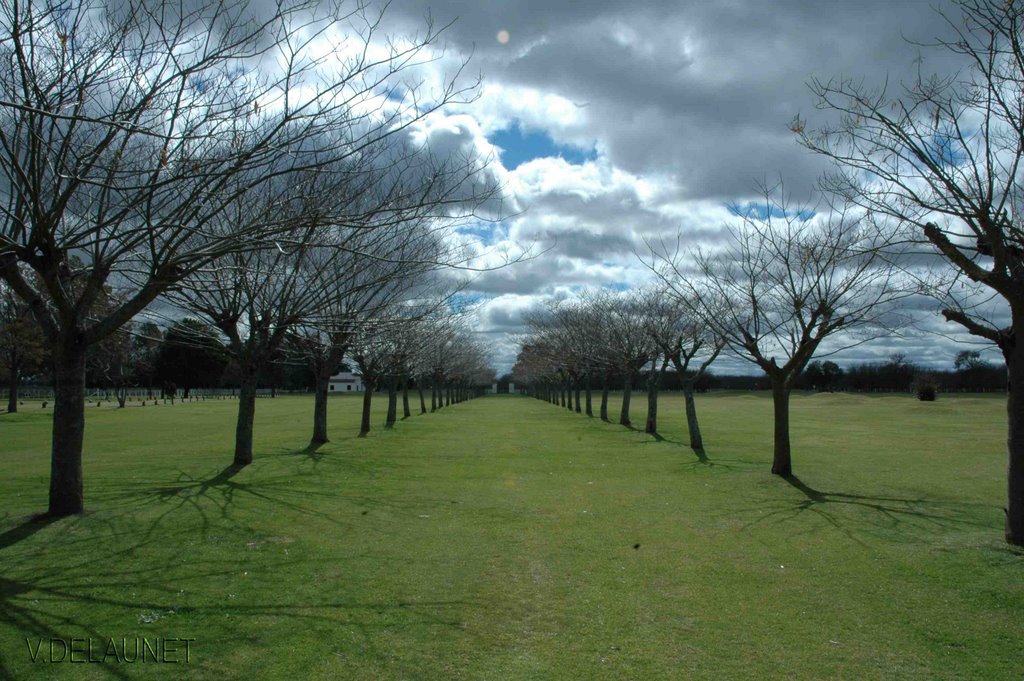
Infinite Pampa (Canuelas)

Borges said about Pampa it was "the unique place in the world where God could walk well off...". The author of the imaginary "biography of Taedo Isodoro Cruz" (Companion of the imaginary one too "Martin Fierro" by José Hernàndez), had really never seen the plains of Siberia in spite of his many voyages . But it is true that in this hopelessly smooth vastness, no obstacle stand between the eye and the horizon.
Except perhaps for the lines of eucalypti which border the long straight lines of the roads which traverse this grass ocean. Except for the innumerable wind mills which draw water necessary to the horses criollos (*) or to the herds of “holanda-argentina”, the most widespread species of cows imported from Holland and Switzerland. Except also for the telephone pole on which come to perch one moment the “caranchos” (birds of prey), or the “horneros” which got into the habit of building their mud made nests on wires. No, that are not either the poor “pueblos” without bell-towers, the names of which betraying the origin of their founder, which could stop the blustering “Pampero” or the " Sudestada” above the “llanura”. The air is sharp there in winter, pure in summer in spite of the heat which crushes men and animals when the winds finished blowing. A clear, limpid, and contrasted light floods this place of melancholy where only fellows being content with little, can survive the time which passes, slowly, invariably, identical at each hour, each day, each season : they are called the “gauchos” (*).

Pictures taken on the lands of the estancia La Figura
(*) articles to be published

Estancia Santa Rita (Lobos)

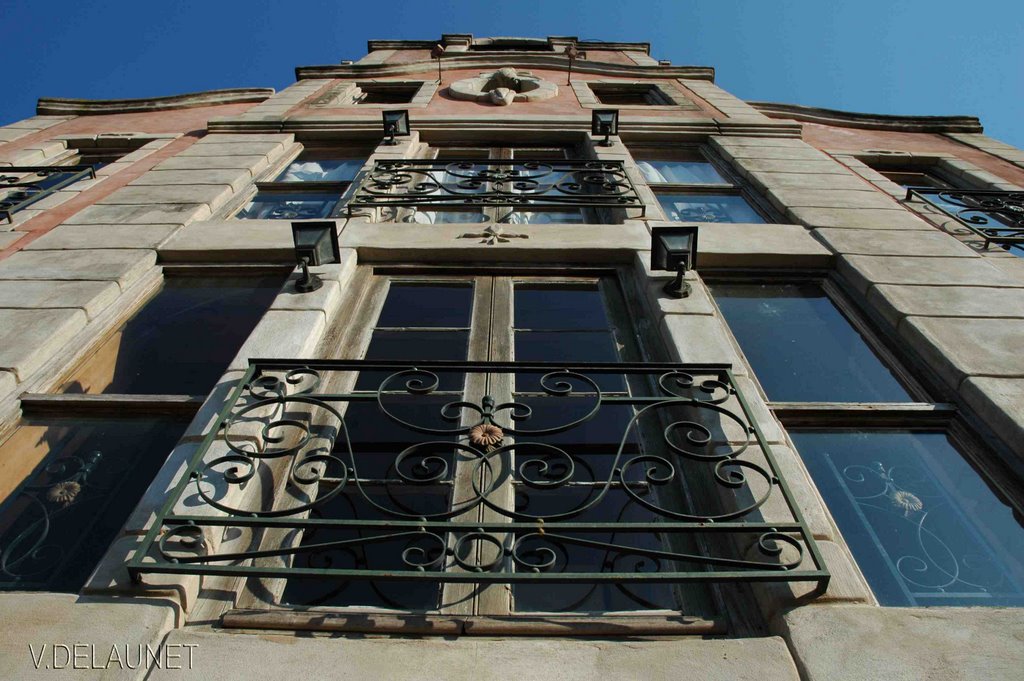
Such a megalomaniac delirium, the Ezcurra family's ex-house draws up its single tower upon the Pampa. Of an indefinable style, if it is not that of a Cocteau , it seems straight exit from the dreams of grandeur of a nouveau riche family of "estancieros”.It was Juan Ignacio de Ezcurra who ordered its construction around 1790 and in this humble residence, the gentle Encarnación, born on August 24, 1795, passed most of her childhood. Good family girl, she could not have another destiny except one of those who have money and power.He was only 2 years old more than her, almost to the very day, but already he had heard the gun sound. It was in 1806, at the time of the English landing, when he had joined the Company of the Cadets of the Regiment of Migueletes to defend Buenos Aires. 20 years old, he was at the head of the immense land of Laguna del Monte and had a great fortune. The young Encarnación and her parents were certainly not indifferent to that. She, anyway, understood very quickly what would be the destiny of Ortiz de Rozas, become thereafter Juan Manuel de Rosas (*), she married on March 16, 1813.
She knew very quickly too that he could need her if necessary. Thus, when the House of Deputies refused the exceptional powers to Rosas, and while he dashed off in the first expedition of the desert in 1833 to submit Indians of the South, she stayed in Buenos Aires to constantly inform him about the political situation evolution. Encarnación wrote one of the darkest pages of the history of Argentina to allow her husband to reach the supreme function.During his absence, she took the initiative, with Martín Santa Coloma and Ciriaco Cuitiño, chief of the police force, to set up a secret organization in order to fight Rosas opponents, the "Unitarists", by all the means. Known under the name of “Mazorca”, in connection with corn ear (*), this organization survived dead of Encarnación, on October 20, 1838 and continued its sad work to stand the authority of Juan Manuel Rosas self-proclaimed “tyrant” in 1842, and holder of full powers of the new Argentinian Confederation. The great man fell of his pedestal one day of 1852. Settlings of scores succeeded after executions: butchers of yesterday became gallows birds, and Rosas did not have any scruple to require asylum to Englishes he had fought a few years earlier.

(*)Juan Manuel de Rosas (1793-1877) soldier and Argentinian politician (Federalistic). 1st leader of the Argentinian Confederation between 1835 and 1852.

(**)some historians support the thesis that in fact it is the contraction the 2 words “mas” “Horca” what means: more brackets…

"Ferrocarriles Argentinos", searching for times lost.

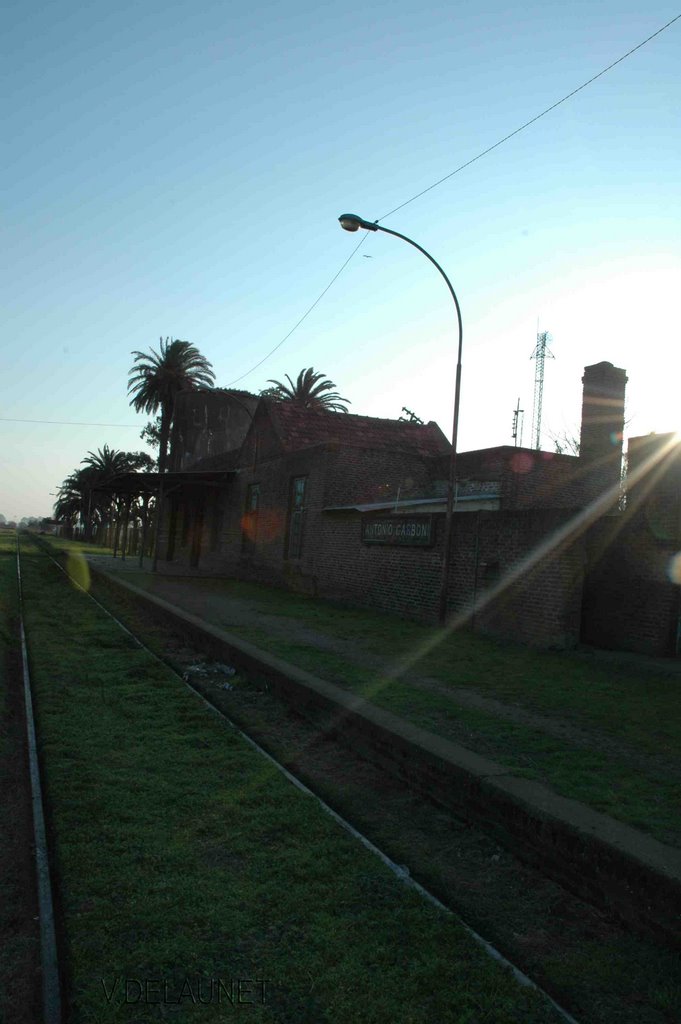
Last July, the Argentinian state invited bids to European companies, of which the French Alstom, for the realization of a high speed line between Buenos Aires and Rosario.Does this outburst mean that the politicians of this country take finally conscience of the importance of the train in a country where the plane and the bus supplant it for a long time?Will it be enough to make up for lost time? All had however started very well. On August 30, 1857, 32 years only after the startup of the first railway line of the world in England, Argentina inaugurated the line Buenos Aires- Floresta (10 kms). In 1880, it counted 2500 Kms from ways, 28000 in 1910, 40000 in 1930 and was placed then at the 3rd rank of the American continent behind the United States and Canada, holding 43% of the rail network of South America. Paradoxically, it is this constructor frenzy which precipitated the decline of the train. British, French or American companies to which had been allotted various concessions, engaged in an unrestrained competition thus never acted in concert to set up a homogeneous network as for the width of the ways. Was added to that the disinterest of the politicians after the 2nd world war. The travelling material became increasingly decayed and the network fell in fallow. The nationalization of the Argentinian railroads in 1965, ended with a chronic deficit representing more than 1% of the GDP. At the end of the Eighties, 55% of the ways were almost unusable. In 1991, the contrary decision was made, but privatization neither improved the state of the network nor that of the material. Some portions are today still in such a state (including in the Capital), that they oblige trains to roll in step to prevent that the ballast does not settle or that a bridge break down. Curiously however, the service continues, regular, punctual when it can be, to the last station of the last “pueblo” of the Pampa, for a long time unused…

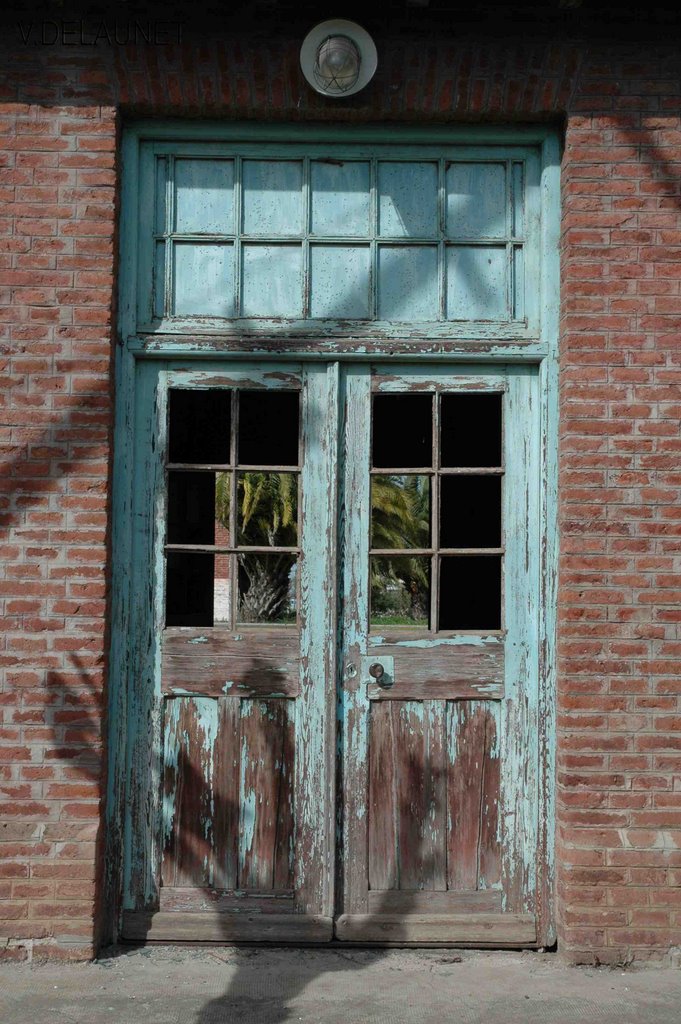
Pictures of this article were taken at the village “Antonio Carboni”

Estancia El Ombu de Areco (San Antonio de Areco)

In 1994, President Carlos Saul Menem puts an end to the obligatory military service. His decision follows upon the death of the young recruit , Omar Carasco, in the Zapala quarter.The bill of conscription had been tabled in 1900, in the middle of frontier tension period with Chile, by Colonel Pablo Riccheri, Minister for the War, at the time of the second presidential mandate of Roca (1898-1904).At the end of long and animated debates between its partisans, among whom the veteran of the war of Paraguay, Colonel Jose Dantas, and its opponents, leaded by the General Alberto Capdevila, the law was approved on October 11, 1901 by the House of Deputies. It was promulgated on December 5 by the Senate with the n° 4031 putting an end to the in force National Guard system and thus concretizing article 21 of the Constitution which specified that “any citizen was obliged to take the weapons to defend the Constitution…” Riccheri had been born in 1859. Well graduated from the Military College in 1879 with the rank “Teniente Segundo”, he wished to perfect his knowledge and was sent to Europe to integrate the Superior School of War of Belgium. Immediately on his return, he knew a fulgurating rise within the Army. Before taking political responsibilities, he thus reached the supreme rank of Staff Chief of the Army. If his career was brilliant, Riccheri knew the pain to see his wife sinking into madness, for long years at a time before dying. While his only daughter succumbed to an appendicitis operation at the age of 12. Retired since 1918, he divided then his time between the residence which he had downtown, on Lavalle street, and the estancia “el Ombu de Areco” that he had made build in 1880. Recluse, melancholic, he died in 1936, honoured with the title of “teniente general”. Honoured but unhappy.

Estancia El Ombu de Areco
www.estanciaelombu.com
(00 54) 11 4710 2795

3 - On the way of the Jesuit estancias (Jesus Maria)

The local Indian tribes called them “Guanusacate”. These lands at the feet of the Sierra Chica Eastern slope , in the north of Cordoba, were conquered by the Spanishes at the beginning of the XVIIe century. In 1618, their owner, Don Gaspar de Quevedo, sell them to the Society of Jesus. Quickly they take the name of “Jesus Maria”. Their fertility, the arrival of many Indian workmen (114 in 1747) allow to the property to garner increasingly prolific harvests. The book of account of the Father Superior Antonio Machoni, take 48000 vine-feet, 65 pear trees and gathering of 6000 ognons in account. He mentions the existence of two mills, a tank and speaks about many cattle heads. Equipped in priority with rooms and storages, the estancia “Jesus Maria” only had very tardily a chapel. The Father Antonio Castillo, in a letter sent to the Father Jose Rodriguez explains to him that he has just sent masons to work on the building site of the church. We are in 1763, a few years before the expulsion of the Jesuits (*).During the XIXe century, the estancia received historical figures of Argentina : San Martin, Belgrano, Lavalle, Sarmiento.

(*) article "The Jesuit missions" (mai 2006)
Reference for the 3 articles "on the way of the Jesuit estancias" : "El camino de las estancias" de Carlos Page

Estancia La Paz (Ascochinga)

Contrary to San Martin, Julio Argentino Roca (1843-1914) is not what we can call a popular figure of the Argentinian history.
If some dedicated to him a certain admiration (the last owner of Estancia La Paz, the Roca family holiday house, tells that the best society ladies of Buenos Aires, had given an ivory covered book to him, to thank him for having saved colonist women and children from the “malones” of the Indians), others preserve of him the memory of the sanguinary chief of the “Campaign of the desert”.At that time, the colonial thrust, which find expression in the creation of new villages, exacerbates indeed tensions with the indigenous community, in particular with the people Mapuche (Araucans). President Avellaneda, in power since 1874 entrusts Alsina then Roca with the responsibility to subdue the Indian tribes organized in confederation under the authority of Cacique Namuncurà.The zeal with which Roca fulfills his mission (*) allow to obtain very quickly a lasting peace in the most southern areas and to put forward the sovereignty of Argentina in Patagonia.With these successes, Roca reaches the power in 1880. He will stay at the head of the country until 1884. The collective memory remembers his time like that of “generation 80's” marked in the cultural sphere by a certain fascination for France.Many haussmannians architects and landscape designers (**) are invited to give to Buenos Aires a resemblance of Paris. In the high society, established already at the edge of Rio, in the northern districts , in San Isidro, it is of good form to speak French. Town centre large colonial houses were deserted by their occupants in 1871, at the time of the yellow fever epidemic, and most of them became the reception buildings (conventillos) for penniless immigrants.Paradoxically, manners remain very strict. On the Mar del Plata beaches, men do not have the right to be less than 30 meters from the women and the sale of telescopes is prohibited.Roca will recover the power in 1898. His mandate, which will end in 1904, will be marked by frontier tensions with Chile, to which a certain Francisco Pascasio Moreno (*) will try to find solutions.

(*) Article “the glacier Perito Moreno” (février 2006)
(**) Article "Jean-Charles Thays" (août 2006)

Estancia La Paz
www.estancialapaz.com
(00 54) 35 2549-2073

Jean-Charles Thays, a French landscape designer in Argentina

Filled with wonder by landscapes he sees and people he meets, Jean Charles Thays decides one day of 1889, whereas he is 40 years old, to remain in Argentina.Favorite of Edouard André (politician and French collector of the Second Empire, whose private mansion is today the Museum Jacquemart-Andre in Paris), he is very quickly promoted Director of Parks and Promenades of Buenos Aires by the authorities of the city.His creations then translate the spirit "Belle Epoque" into vogue in Paris. he settles down quickly to what will remain without any doubt, his two major works: the Botanical Garden and the Park of Palermo.The direction of the perspectives, the omnipresence of artificial lakes and islands in the middle of the gardens he composes, the dissymmetry of the plantations, singularly reminds of the Bois de Boulogne, de Vincennes or the Park of Buttes-Chaumont in Paris. Only the species of trees differ.He will leave his impress in most of the large towns of Argentina:
- In Buenos Aires the "parques" Centenario, Patricios, Barrancas de Belgrano, the places Constitución, Congreso et Mayo
- In Cordoba, the "Parque" Sarmiento,
- In San Miguel de Tucuman, the "parque" 9 de Julio,
- In Santa Fé, the "Parque" Juan de Garay,
- In Mendoza, the "Parque" San Martin,...Some Argentinian dignitaries will call upon his talent for the plannings of the gardens of their private residences. It is the case of President Roca for the park of his Estancia "La Paz" in Ascochinga (Pcia de Cordoba).Jean Charles Thays become Carlos Thays dies out in 1934 in his adopted town : Buenos Aires.